
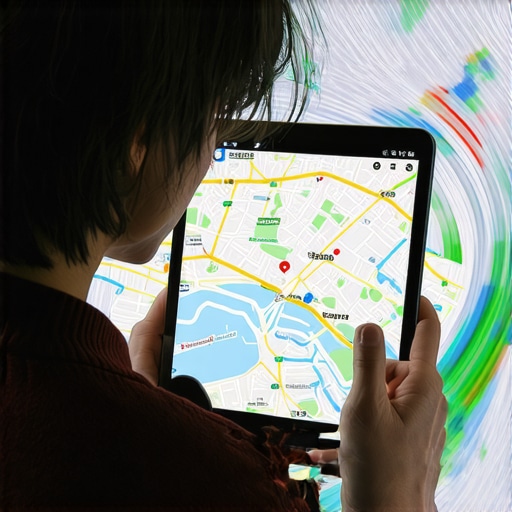
Why Your Google Maps Rank Tracker is Showing You a Distorted Reality
You are sitting in your office, coffee in hand, and you decide to check how your business is performing. You open a browser, type in your primary service followed by your city, and there you are: Number 1 in the Local Map Pack. You feel a surge of pride. Your google maps rank tracker confirms it with a steady green line. But then, you drive five blocks away to grab lunch, perform the same search on your phone, and suddenly, your business is nowhere to be found. You’ve dropped to position #12, buried behind competitors you’ve never even heard of.
This isn’t a glitch in the system; it is the reality of modern local search. For years, business owners have relied on the idea that “rank” is a single, static number – a trophy to be won and held. In reality, Google builds a brand-new ranking for every single search session initiated by a user. The report your google maps rank tracker sent you this morning might be technically accurate for one specific coordinate, but it is likely providing a distorted reality that masks the holes in your local visibility. To truly rank google business profile assets effectively, you must understand that proximity is fluid and traditional reporting is often a lie.
The Death of the “Fixed” Ranking: Why Your Reports are Lying
The “old way” of tracking local SEO was simple, albeit flawed. An agency would run a report once a month, checking your ranking from a single point – usually the center of a zip code or the “centroid” of a city. If you appeared in the top three from that one spot, the report marked you as “Winning.” However, Google’s algorithm has undergone a massive technical shift toward hyper-local, proximity-based results. This shift has rendered traditional local seo tools that use linear tracking almost entirely obsolete.
The “Centroid” problem is the primary reason your reports are lying to you. If your business is located on the edge of town, but your local seo software is only checking rankings from the city center, you are getting a false narrative. You might be invisible to the 50,000 people living in the suburbs right next to your shop, while your tracker tells you that you are #1 in a downtown area where you have no physical presence. This is why many business owners find themselves in a frustrating position: their SEO reports look great, but their phones aren’t ringing.
To succeed in this environment, you need to understand how to spot a Texas SEO company that actually gets 2026 results. Real experts know that a single-point rank check is a vanity metric. If your local seo agency isn’t talking about proximity filters and neighborhood-level volatility, they are likely using outdated methodology that ignores how Google actually serves results to your customers.
The 5 Variables That Reshuffle the Map Pack in Real-Time
Why does the Map Pack feel so unstable? It’s because Google is no longer just looking at your “relevance” and “prominence.” It is looking at the context of the searcher. To rank higher on google maps, you have to account for these five real-time variables that can reshuffle the deck in seconds.
1. Searcher GPS Coordinates
Proximity remains the #1 variable in the local algorithm. Research shows that rankings can drop significantly just 0.5 miles away from the business location. If a searcher is standing on the north side of a street, they may see a completely different Map Pack than someone standing on the south side. This is why a google maps rank tracker that doesn’t account for precise latitude and longitude is essentially guessing.
2. Device Class: Mobile vs. Desktop
Google treats mobile and desktop searches differently. A desktop user in an office is often looking for information or planning a future visit, whereas a mobile user is often looking for an immediate solution. The “near me” intent is much stronger on mobile, causing Google to tighten the proximity filter even further. If your google business profile seo strategy doesn’t differentiate between these device classes, you’re missing half the picture.
3. Search Session Context
What did the user search for right before they looked for you? If a user searches for “water heater manual” and then searches for “plumber,” Google’s AI understands the intent is likely a repair. If they searched for “new home construction” first, the Map Pack might prioritize contractors who handle installations. This session-based personalization makes it impossible for a static google maps ranking service to be 100% accurate across all users.
4. Personalization Signals
Google knows if a searcher has visited your website before, if they’ve called you through a previous search, or if they have checked into your location via Google Maps. These personalization signals mean that you might see yourself at #1 because you visit your own shop every day, while a brand-new customer sees you at #10. This creates a “bubble” that distorts your perception of your own google business profile ranking.
5. Query Intent Classification
Consider the difference between “Chiropractor” and “Emergency chiropractor near me.” A search for “Chiropractor in Tucson” might show a broad range of well-established clinics across the city. However, the same searcher on a phone at 9 PM searching for “emergency chiropractor” will see a hyper-local list of clinics that are currently marked as “Open Now.” The time of day and the specific wording of the query can cause the Map Pack to look completely different from one hour to the next.
Linear vs. Grid Tracking: Seeing the “Heatmap” of Your Business
If linear tracking is dead, what is the alternative? The answer lies in geo-grid tracking. An authoritative google maps rank tracker must use a geo-grid – a system that checks your rankings at dozens or even hundreds of specific points across a map. Instead of a single number, you get a “heatmap.”
Imagine a 13×13 grid laid over your city. Each node on that grid represents a search performed from that exact spot. In the center, where your office is, you might see a “1” (green). But as you move three miles east, you might see “5” (yellow), and five miles west, you might see “15” (red). This heatmap tells you exactly where your local seo tools are working and where your “blind spots” are.
Using a google maps ranking service that provides this level of granularity allows you to stop guessing. You can see that you dominate the neighborhood to your North but are completely invisible to the wealthy suburb to your South. This data is actionable. It tells you where to focus your local link building, where to run targeted local ads, and where to mention specific neighborhood names in your google business profile optimization efforts. To truly scale, you should check out 3 GMB Optimization Texas Settings to Double Your 2026 Map Leads to learn how to bridge these geographic gaps.
Why Your 2026 Strategy Must Account for the “AI Patch” and Helpful Content Updates
As we move into 2026, Google has introduced what many SEOs call the “AI Patch” to the local algorithm. This is an extension of the Helpful Content Update, designed to filter out businesses that are “gaming” the system with thin content or fake locations. We are seeing a trend where businesses drop out of the Map Pack entirely, even if they have hundreds of 5-star reviews.
Recent Reddit research highlights a growing number of local service businesses “ghosting” from the results. The reason? A lack of “Proof Signals.” Google is no longer satisfied with a keyword-optimized description. It wants to see real-world evidence that you are a legitimate, helpful business. This includes:
- High-quality, original photos of your team at actual job sites (with EXIF data confirming the location).
- Local-specific content on your website that proves you serve specific neighborhoods (e.g., “Our recent roof repair project in the Deerfield community”).
- Consistent engagement with customers through the Google Business Profile Q&A and Updates sections.
Traditional google maps seo focused on keywords. The 2026 strategy focuses on “Trust and Entity Validation.” If your google business profile optimization doesn’t include these real-world proof signals, no amount of backlinking will save your rankings from the AI Patch. Google’s goal is to ensure that if they recommend a “Plumber in Plano,” that plumber actually exists, is active, and provides a good user experience.
How to Audit Your Rankings Through Your Customer’s Eyes
If you want to escape the distorted reality of your current reporting, you need to perform a “reality check” audit. Here is a checklist for business owners to get a true view of their performance and improve google maps ranking results.
- Stop Searching for Yourself: Every time you search for your business and don’t click, or search and click your own listing, you are skewing the personalization data for your device and location. It provides a “false positive” that you are ranking higher than you actually are.
- Use a Professional google business profile audit tool: These tools bypass personalization and search from clean IP addresses at specific coordinates. This is the only way to see what a “new” customer sees.
- Focus on “Share of Local Voice” (SoLV): Instead of asking “Where do I rank for ‘lawyer’?”, ask “What percentage of the time do I appear in the top 3 across my entire 5-mile service area?” This metric is far more indicative of your actual lead flow than a single keyword rank.
- Analyze Competitor “Heatmaps”: Use your rank higher on google maps tools to see where your competitors are weak. If a competitor is ranking #1 in the city center but doesn’t exist on the outskirts, that is your opportunity to move in with hyper-local content.
- Monitor “Unbranded” vs. “Branded” Searches: If you only rank when someone types your business name, you don’t have a ranking – you have a brand. Real growth comes from ranking for unbranded terms like “AC repair” or “divorce attorney.”
For those looking for a deeper dive into modern tactics, reviewing effective local SEO tips for Plano businesses in 2025 can provide a roadmap for the specific types of content that Google is currently rewarding. The goal is to increase google business profile visibility by becoming a recognized “entity” in your local area, not just a pin on a map.
Conclusion: Moving Beyond Vanity Metrics
The “distorted reality” of traditional rank tracking is a comfort blanket that leads to bad investment. If you believe you are #1 because your google maps rank tracker says so, but your phone isn’t ringing and your “Get Directions” requests are stagnant, your tracker is failing you. It is providing a snapshot of a single moment in a single place, while your customers live in a world of constant movement and algorithmic volatility.
In 2026 and beyond, the winners in local search will be those who embrace the “heatmap” reality. They will understand that to get more calls from google maps, they must dominate not just a city, but a series of micro-neighborhoods. They will use a google maps ranking service that provides transparent, grid-based data and will pivot their strategy based on real-world proof signals rather than just keyword density.
Don’t let a distorted report blind you to the opportunities – and threats – in your local market. It is time to move beyond vanity metrics and see your business through the eyes of your customers. If you are ready to see the truth about your local visibility, contact Kevin Pauls for a deep-dive audit. Using advanced SEO Viper Tools, we can map out your true geo-grid visibility and build a strategy that turns those red nodes into green ones, ensuring you rank higher on google maps where it actually matters.