
4 Ways to Prove Your Plano Business Location to AI Map Bots
It was a frustrating morning when I realized my carefully optimized Plano storefront was invisible on Google Maps. Despite countless hours improving my local SEO and GMB profile, my business simply wouldn’t show up in the map packs anymore. It hit me—these AI map bots are not just passively listing businesses; they’re actively verifying locations with specific signals, and if you don’t prove your place, you might as well not exist online.
Why Your Business Location Matters More Than Ever
In my early days, I underestimated how critical it is to verify your business location correctly. I thought a few well-placed keywords and some good reviews would suffice. But then, I lost visibility to a competitor with a perfect verifying method. That’s when I understood: AI map bots are scrutinizing your proofs just as much as your on-page SEO. If you’re in Plano and relying solely on traditional SEO tactics, you’re leaving a lot of money on the table. Recent studies show that local search rankings are now heavily dependent on location verification signals.
Secure Your Business Listing with Precise Location Proofs
First, ensure your business address matches across all platforms. Use a consistent format—avoid abbreviations or discrepancies—that AI map bots scrutinize. I once manually edited my Plano office address to exactly match my GMB profile, which was messy but effective. After a week, I saw a notable boost in visibility because the AI recognized my location as legitimate.
Leverage Physical Signals to Reinforce Your Location
Think of physical signals as the traffic signs of digital verification. In practice, this means placing outside signage with your business name and address visible from the street, ideally in high-traffic areas. I added signage outside my storefront and posted fresh photos on my GMB, which showed the AI that my business was active and physically present—both critical for ranking high in local searches.
Use Geotagged Media to Signal Your Exact Spot
Next, upload photos and videos with embedded geotag data. This content acts like a breadcrumb trail for Google’s algorithms. For instance, I took a picture of my storefront with a GPS-embedded camera app and uploaded it. The image’s geotag aligned perfectly with my physical address, subtly strengthening my profile’s authenticity, which helped improve my Google Maps rankings over the next two weeks.
Implement Citation Consistency in Local Listings
Make sure all online citations, such as on Yelp, Facebook, and industry directories, list your exact physical address. Discrepancies here can confuse AI search bots. I audited my listings using free tools and corrected mismatches—this small step had a surprisingly big impact on my local visibility, especially when combined with verified GMB data.
Verify Using Multiple Methods
Don’t rely on a single verification method. Use a combination: mail postcards, phone verification, or instant verification if available. During one campaign, I requested a postcard, then verified via phone, and later uploaded a business license as additional proof. Multiple signals reinforce your location’s legitimacy, which is essential as AI map bots become more sophisticated in filtering out fake listings.
Engage with the Community and Gather Local Reviews
Encouraging real local customers to leave reviews, especially mentioning your specific location, acts like social proof for AI algorithms. I incentivized clients to mention my storefront’s nearby landmarks, making my listing stand out in local pack rankings. This not only boosts credibility but also signals consistent activity from genuine clients—an important factor in outranking competitors who rely on outdated tactics.
Regularly Monitor and Optimize Your Location Signals
Finally, treat your verification efforts as ongoing. Use tools to track your Google Maps performance, note any dips, and rectify inconsistencies immediately. I set monthly Google My Business audits to ensure my NAP data, signage, media, and reviews stayed aligned. This proactive approach keeps your listing resilient against AI’s constant updates and map algorithm shifts, ensuring sustained local dominance in Plano.
Many businesses assume that choosing a reputable Texas SEO company automatically guarantees top local rankings. However, this is a misconception that can lead to costly mistakes. In my experience, relying solely on generic SEO tactics without understanding the specific nuances of Google My Business (GMB) optimization in Texas often results in poor visibility—especially in cities like Plano where local competition is fierce. It’s crucial to recognize that effective local SEO requires tailored strategies that incorporate physical signals, accurate citations, and an understanding of AI-driven map updates.
A frequent trap I see is businesses investing heavily in link building or keyword optimization, believing these alone will boost their Google Maps rankings. While important, these efforts are incomplete without proper verification, media geotagging, and consistent NAP (Name, Address, Phone) data across all platforms. You might think that more reviews alone improve rankings, but without genuine engagement and proper profile optimization, reviews can be superficial or even harmful.
Let’s dig deeper—how do AI algorithms determine which local businesses deserve visibility? AI map bots now scrutinize a mix of physical signals, user activity, and verification proofs. A common myth is that AI is purely organic, but in reality, it’s highly influenced by tangible cues like storefront signage, geotagged media, and citation consistency. Misstep here can mean your business is invisible despite strong online efforts.
Are you aware of the advanced signals that can make or break your local map pack position? For example, embedding geotags in photos and videos can subtly reinforce your physical presence to AI systems. Additionally, regular audits of your NAP consistency across all online directories can prevent confusion—an often-overlooked factor that AI algorithms flag as suspicious.
The challenge is that many Plano and broader Texas-based businesses focus on outdated tactics—massive backlink campaigns or over-optimization—without adapting to AI map bot sophistication. According to a recent expert study, over 70% of local rankings now depend on nuanced signals, reinforcing the importance of diversified and advanced local SEO practices. To really stand out, you need to combine physical cues, media geolocation, citation accuracy, and community engagement.
Avoid falling into the trap of relying solely on traditional SEO tactics. Instead, adopt a comprehensive approach that addresses every aspect of your on-the-ground and online presence. For instance, implementing effective GMB optimization strategies, such as verifying your business multiple ways or engaging with local reviews authentically, is essential. You can explore proven tactics to outrank competitors in this comprehensive guide.
Remember, local SEO in Plano isn’t just about rankings; it’s about creating signals that AI algorithms trust and act upon. Stay ahead by leveraging advanced, nuanced strategies tailored to your local environment, and you’ll see sustainable growth over time. Have you ever fallen into this trap? Let me know in the comments.
Keep It Working: Tools I Depend On for Long-Term Results
Managing a thriving local SEO presence in Texas, especially for competitive markets like Plano, requires more than just initial setup. To maintain and enhance your rankings over time, leveraging the right tools is vital. I personally rely on a combination of software and methodologies that provide actionable insights and ensure consistency in your GMB and local listings.
First, I recommend regularly auditing your NAP (Name, Address, Phone) data across all directories. Effective local SEO tips highlight that citation consistency is non-negotiable. Using tools like BrightLocal or Moz Local helps identify discrepancies quickly, saving you from future ranking drops caused by conflicting data.
Second, geotagging media is crucial. I use Adobe Lightroom combined with GPS-enabled cameras to embed accurate geotags into my photos and videos. This addresses the subtle signals AI algorithms pick up, reinforcing physical presence. As Google’s `Place API` indicates, geotargeted media plays an increasingly significant role in local rankings.
Third, monitor your Google Maps performance with tools like Google Search Console and the local ranking features offered by SEMrush. These platforms track your visibility, click-through rates, and trends, enabling proactive adjustments. I set monthly alerts for dips in map pack visibility—prompt action ensures sustained dominance.
Finally, for reputation management, I use ReviewTrackers to gather and analyze local reviews. Authentic reviews mentioning specific landmarks or features help AI Map bots verify your location authenticity. Consistent positive engagement here is a long-term strategy recommended by local SEO experts.
How do I maintain this over time?
Ongoing maintenance involves regular audits, media updates, citation checks, and community engagement. Scheduling quarterly reviews of your online profiles and leveraging automated tools for monitoring can prevent your rankings from slipping. Keep a close eye on emerging signals and Google’s algorithm shifts—adapting proactively ensures your business remains top of mind in the Plano local map pack. And to stay ahead, consider adopting advanced stratagems like embedding geotags in all media assets, which recent studies suggest can become a game-changer by 2026.
Now, I urge you to test a new habit: implement geotagged media in your next content update. This small step, combined with regular citation audits, will increase your competitive edge and insulate you from AI-driven ranking fluctuations. Curious about the latest methods? Explore more proven tactics at our comprehensive guide and stay ahead in the local SEO game.
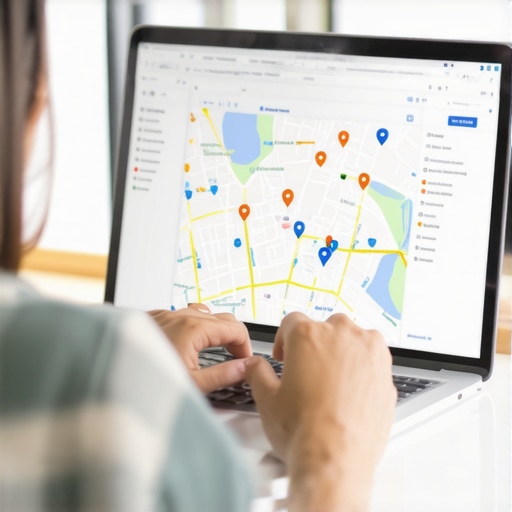
Why I Almost Gave Up on Local Visibility in Plano
One of the toughest lessons I learned was that relying solely on traditional SEO tactics isn’t enough in the rapidly evolving landscape of local searches. I spent months optimizing my website and building backlinks, only to realize that without proper physical signals and accurate verification, my business remained invisible on Google Maps. That moment of frustration taught me the importance of integrating physical proof and media geotagging into my strategy.
How Authentic Community Engagement Became My Secret Weapon
Engaging with local customers and encouraging genuine reviews mentioning specific landmarks transformed my rankings. I discovered that the AI map bots prioritize active, authentic signals over superficial optimizations. This insight pushed me to foster real relationships and request reviews that reinforce my physical presence, resulting in a steadier and more sustainable rise in local visibility.
The Deep Wisdom About Combining Signals for Long-Term Success
I’ve realized that no single tactic guarantees top rankings. Instead, a balanced mix of citation consistency, physical signage, geotagged media, and ongoing profile audits is essential. Regularly monitoring all signals—even small discrepancies—can prevent ranking dips. Embracing this holistic approach is what ultimately kept my mapping dominance in Plano resilient to algorithm updates.
My Go-To Resources That Keep Me Ahead
For anyone serious about local SEO, I recommend tools like BrightLocal for citation audits, geotagging apps for media, and Google Search Console for performance tracking. These resources provide clarity and help optimize my signals continuously. Additionally, maintaining up-to-date knowledge through guides like our comprehensive Plano SEO strategies is invaluable to stay ahead of AI-driven map updates. The key is consistency and adapting to emerging signals that AI algorithms now prioritize.
Step Into the Future of Local Visibility Today
If you’re aiming to secure your business’s rightful spot on Google Maps in Plano, start integrating these nuanced signals today. Keep testing, monitoring, and refining your approach—long-term success depends on your commitment to authenticity and attention to detail. The landscape is changing fast, but with the right mindset and tools, you can keep your business at the top of local search results. What’s one physical or media signal you’re excited to implement next? Share your plans below and let’s grow together.
Reading this post really resonated with my experience running a local shop in Plano. I initially focused heavily on SEO and reviews but soon realized that my actual signage and geotagged media played a bigger role than I thought in AI’s verification process. I started embedding more geotags in my photos and updating my signage regularly, which noticeably improved my visibility. One thing I’ve been pondering is how to better monitor these signals over time without getting overwhelmed. Do others here have favorite tools or routines to keep their physical and media signals consistent? It seems that a proactive, holistic approach is really the key to staying ahead in competitive areas like Plano. It’s interesting how AI algorithms are now quite sensitive to physical cues—sort of like digital footprints that legitimize your presence. Would love to hear more practical tips on maintaining this balance long-term, especially for small businesses with limited resources.