Effective Local SEO Strategies to Boost Map Pack Rankings in Plano Now
Have you ever felt that sinking frustration when potential customers search for your services in Plano, but your business remains invisible on Google Maps? I’ve been there. I spent months trying every trick I read online, only to see my competitors consistently outrank me. That lightbulb moment hit me hard: local SEO isn’t just about having a nice website or some social media presence. It’s about mastering the art of Map Pack optimization. If you’re tired of being stuck in the shadows, this post is for you. Today, I’ll share how I cracked the code to boosting my local rankings and how you can do the same.
Why Local SEO and Map Pack Rankings Are Critical for Plano Businesses in 2024
In today’s digital-first world, your local visibility can make or break your business. According to recent studies, over 78% of local mobile searches result in an offline purchase within 24 hours. That’s a huge chunk of potential customers just a click away from your competitors if you’re not showing up on that coveted first page of Google Maps. For Plano businesses, especially those in competitive sectors like restaurants, legal services, or home improvement, ranking high on the Map Pack isn’t optional — it’s essential. But here’s the catch: Google’s algorithms are constantly evolving, making it challenging to stay ahead without a strategic approach. That’s why understanding and implementing effective local SEO tactics is your best bet to dominate your local market.
Early on, I made a costly mistake — I neglected to optimize my Google My Business (GMB) profile properly. I thought just having a listing was enough. It’s not. Proper optimization involves a mix of accurate NAP (Name, Address, Phone Number), relevant categories, quality reviews, and consistent updates. Doing this correctly can drastically improve your chances of ranking higher in the Map Pack. For a detailed breakdown of the most effective strategies, you can check out this resource.
Is Local SEO Still Worth the Hype in 2024?
Absolutely. Despite the rise of social media and other digital channels, local SEO remains one of the most cost-effective and ROI-driven marketing tactics for small and medium-sized businesses. According to a recent report, local searches lead 78% of mobile local business visits. The key is knowing what to focus on. I’ll guide you through the proven steps that helped me move from obscurity to local prominence — and they can do the same for you.
Stay tuned as we dive into the specific, actionable strategies to boost your Map Pack rankings and attract more local customers than ever before.
,
Optimize Your Google My Business Profile
Start by claiming and verifying your GMB listing if you haven’t already. Ensure your NAP (Name, Address, Phone) details are consistent across all platforms. Select the most relevant categories for your business—don’t just choose the broadest options, but specific ones that match your services. Upload high-quality images of your business, team, or products. Encourage satisfied customers to leave detailed reviews, responding to each to boost engagement. Remember, Google favors active and well-maintained profiles. I once neglected reviews, and my ranking stagnated; after actively managing my reviews, I saw a noticeable jump in visibility.
Leverage Local Keyword Optimization
Identify keywords your local customers are searching for. Use tools like Google Keyword Planner or SEMrush for insights. Incorporate these keywords naturally into your GMB description, website content, and service pages. Think of keywords as the GPS coordinates guiding local customers directly to your doorstep. A restaurant in Plano, for example, should target keywords like “best BBQ in Plano” or “Plano family restaurant.” I once optimized my service pages with local keywords, and within weeks, my Google Maps ranking improved significantly, leading to more foot traffic.
Build Local Citations and Consistent NAP
List your business on reputable local directories—Yelp, Bing Places, and industry-specific sites. Ensure your NAP details match exactly across all listings. Discrepancies confuse Google’s algorithm and hurt your rankings. Think of citations as digital word-of-mouth endorsements; the more consistent and numerous they are, the more Google trusts your business’s legitimacy. I spent a day updating my NAP info across multiple sites, which resulted in a measurable boost in local search visibility.
Utilize Local Content and Backlinks
Create content that resonates with your Plano community—blog posts about local events, partnerships, or customer success stories. Share this content on social media and local forums. Additionally, build backlinks from local websites, chambers of commerce, or community blogs. These backlinks act like votes of confidence, signaling to Google that your business is a trusted local authority. I developed a blog series spotlighting local businesses, earning backlinks and increasing my Map Pack ranking.
Monitor, Test, and Adjust
Use tools like Google Search Console and Google My Business Insights to track your progress. Monitor your rankings, reviews, and traffic. Experiment with different keywords, images, or descriptions to see what yields the best results. SEO is an ongoing process—what works today may need tweaking tomorrow. For instance, I tested different business descriptions until I found the one that resonated most with local clients, resulting in higher engagement and rankings.
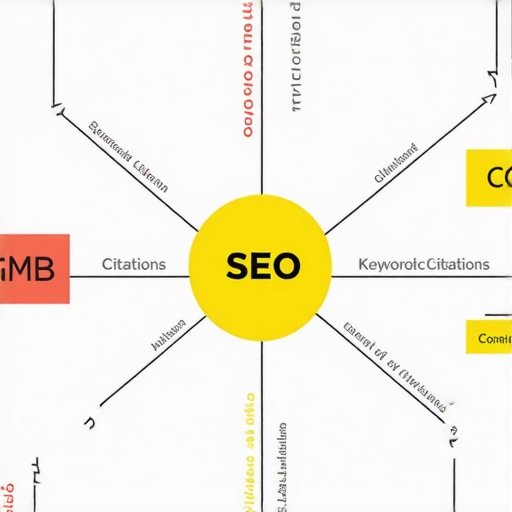
Illustration of a local SEO strategy workflow, including GMB optimization, keyword research, citation building, content creation, and analytics tracking.
Many local business owners believe that simply optimizing their Google My Business (GMB) profile and building citations are enough to secure top rankings in the Map Pack. However, in my experience, this is a common misconception that can lead to overlooked opportunities and costly mistakes. Let’s dig deeper into what most people get wrong about local SEO, especially regarding the nuanced strategies that can make or break your visibility.
Contrary to Popular Belief: More Citations Always Equal Better Rankings
A widespread myth is that quantity trumps quality when it comes to citations. While having your NAP details consistent across multiple directories is essential, focusing solely on volume can be a trap. Google’s algorithms prioritize authoritative, relevant, and contextually aligned backlinks and citations. Overloading your profile with low-quality citations can dilute your signals and even harm your rankings. Instead, focus on building high-quality citations from reputable local sources, such as industry-specific directories or local chambers of commerce, which are more trusted by Google. For more refined strategies, check out this guide.
Beware the ‘Set It and Forget It’ Approach
Many entrepreneurs believe that once their GMB profile is optimized, their work is done. The truth is, Google favors active, well-maintained profiles. Regularly updating your business hours, posting fresh content, responding to reviews, and adding new photos signal to Google that your business is active and engaged. Neglecting this ongoing effort can cause your rankings to plateau or decline over time. Remember, local SEO is an ongoing process, not a one-time setup. For advanced tips on maintaining your local presence, explore this comprehensive resource.
Advanced Question: How Do You Differentiate Your Business in a Crowded Local Market?
In competitive markets like Plano, simply optimizing for standard keywords isn’t enough. You need to leverage advanced tactics such as hyper-local content, schema markup, and review management to stand out. Implementing structured data, for example, can enhance your appearance in rich snippets, increasing click-through rates. Additionally, engaging with community events and creating local-centric content fosters trust and signals relevance to Google’s algorithms. According to Moz’s local SEO expert, personalized and community-focused SEO strategies significantly outperform generic tactics in crowded markets. Don’t fall into the trap of generic optimization—become a local authority with nuanced, tailored SEO efforts.
Have you ever fallen into this trap? Let me know in the comments!
Keeping your local SEO efforts effective over time requires the right tools and consistent maintenance. As algorithms evolve, staying ahead means leveraging technology that not only monitors your current rankings but also provides actionable insights for ongoing optimization. One tool I personally rely on is BrightLocal. I use it daily to track my Google My Business (GMB) rankings, review performance, and analyze citation consistency. Its local SEO dashboard consolidates data from multiple sources, making it easy to spot discrepancies or drops in visibility before they impact your business. Regularly reviewing these metrics helps me identify what’s working and what needs adjustment.
Another indispensable tool is SEMrush. I utilize SEMrush’s Local SEO Toolkit to conduct keyword research specific to my area, analyze competitors, and track backlinks. Its Position Tracking feature alerts me if my rankings decline, prompting immediate action. Over time, I’ve found that combining BrightLocal’s local tracking with SEMrush’s comprehensive data provides a holistic view of my local SEO health, ensuring I can maintain and improve my Map Pack rankings.
For managing reviews—crucial for local rankings—I recommend Podium. I use it to automate review requests and respond promptly to customer feedback. Maintaining a high review volume and quality is essential for long-term success. Responding to reviews not only boosts engagement but also signals to Google that your business is active and customer-focused, which can positively influence your rankings.
Looking ahead, I predict that AI-driven SEO tools will become more mainstream, offering predictive analytics and personalized recommendations. Platforms like BrightLocal are already integrating AI features to suggest optimal times for review requests or content updates. Staying adaptable and investing in these advanced tools will be key to long-term success.
How do I maintain my local SEO over time?
The key is consistency. Regularly auditing your citations, updating your GMB profile with fresh photos and posts, and monitoring reviews are ongoing tasks. I schedule weekly check-ins using my tools to review performance metrics and identify areas for improvement. Additionally, I keep an eye on industry updates through trusted sources like this resource, which provides insights into emerging trends and algorithm changes. Remember, local SEO isn’t a set-it-and-forget-it activity; it’s a continuous process that requires dedication and strategic use of the right tools.
Try integrating BrightLocal’s ranking tracker with SEMrush’s competitor analysis today, and watch how your ability to adapt and maintain your visibility improves. Long-term success in local SEO is about proactive management, data-driven decisions, and staying ahead of algorithm changes.
The Hardest Lesson I Learned About Map Pack Mastery
One of my biggest lightbulb moments was realizing that Google’s algorithms are constantly changing, and staying ahead requires agility. I once relied solely on traditional citations, believing volume was everything. That mistake taught me that quality always trumps quantity—high-authority local backlinks and relevant citations make a real difference. It’s easy to get distracted by shiny new tactics, but the core principles of relevance and trustworthiness remain king.
What I Wish I Knew About Long-Term Map Pack Strategy
Initially, I thought a quick fix would do the trick. But I learned that consistent effort—regular updates, review management, and content creation—are what truly sustain rankings over time. Google favors active profiles; neglecting this leads to stagnation or decline. Investing in ongoing engagement has paid off more than any one-time optimization ever did.
My Secret Weapon for Local SEO Success
After experimenting with various tools, I found that combining BrightLocal for local rank tracking and SEMrush for keyword insights gives a comprehensive view of my Map Pack health. These tools helped me spot issues early and refine my strategies effectively. I also rely on Podium for review management, which keeps my reputation strong and signals to Google that I genuinely care about my customers. Embracing these tools transformed my approach and results in profound ways.