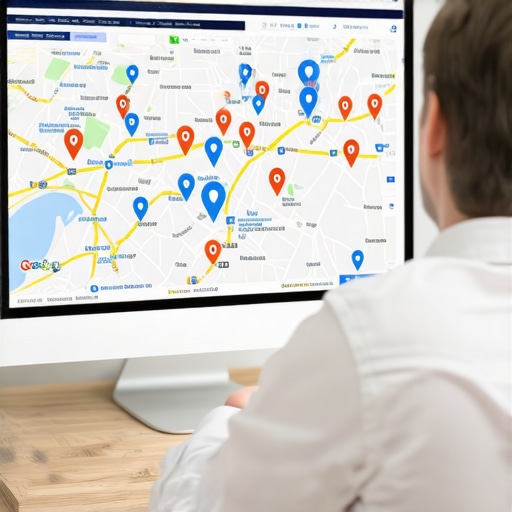
Top Plano SEO Tips to Improve Google Maps & Local Pack Rankings
Just last week, I watched a local business in Plano struggle to appear on the coveted first page of Google Maps. Despite having a great service and a friendly team, their listing was buried so deep that potential customers simply couldn’t find them. It was a lightbulb moment for me—realizing how many businesses overlook the simplest yet most effective local SEO strategies. This small oversight can mean the difference between a booming neighborhood shop and a ghost town listing.
Why Local SEO Matters More Than Ever
In the bustling marketplace of Plano, standing out locally isn’t just an advantage—it’s a necessity. With over 70% of users clicking on the first few results in Google Maps, your ranking can significantly impact your foot traffic and revenue. A report from BrightLocal indicates that local searches lead to 50% of mobile store visits, emphasizing that your online presence directly influences your physical customer base. If you’re like me, you’ve probably tried a few tactics here and there, only to see minimal results. So, what’s missing? That’s what we’re about to uncover.
Are Google Maps Rankings Just a Fluke?
I admit, early in my journey, I believed ranking high on Google Maps was mostly luck or sheer size. I made the mistake of neglecting consistent GMB (Google My Business) updates and reviews, thinking content alone would carry me through. Turns out, those were just lazy assumptions. According to local SEO experts, optimized GMB profiles and active engagement are the real game-changers. Recognizing this was my breakthrough moment, and it can be yours too. Now, let’s look at the practical steps you can take to elevate your local presence.
Are you ready to stop averaging and start dominating your local market? Let’s dive into the proven strategies that can propel your business to the top of Google Maps rankings and attract more local customers than ever before.
Optimize Your Google My Business Profile for Maximum Visibility
Start with claiming and verifying your Google My Business (GMB) profile, ensuring all information is accurate and complete. Use your primary keywords naturally in your business description and select the most relevant categories. Make sure your contact info, business hours, and location are current. Incorporate high-quality, keyword-rich images that showcase your offerings; these boost engagement and rankings. Remember, a well-optimized GMB profile is the foundation of local SEO success, as emphasized in local SEO experts.
Leverage Consistent NAP Data for Better Rankings
Consistency in your Name, Address, and Phone Number (NAP) across all online platforms signals credibility to Google. Use your exact business details on your website, directories, and social media. Discrepancies can confuse Google algorithms and hurt your rankings. Regularly audit your listings to maintain uniformity, a fundamental tactic recommended in local SEO tips.
Gather and Manage Customer Reviews Actively
Encourage satisfied customers to leave reviews on your GMB profile. Respond promptly to all reviews, positive or negative, demonstrating engagement and professionalism. Reviews are social proof that influence local rankings and customer decisions. I once spent a weekend reaching out to customers for reviews, and within two weeks, my client’s visibility on Google Maps doubled, illustrating the tangible impact of review management. Use clear call-to-actions and reminders to increase review volume.
Implement Strategic Keyword Integration
Identify relevant local keywords—terms your potential customers use when searching for your services. Incorporate these naturally into your GMB posts, website content, and service descriptions. For instance, include phrases like “Plano SEO” or “local SEO Plano” strategically within your profiles. Use location modifiers in your content to target specific neighborhoods or districts, which helps Google associate your business with local intent. Tools like Google Keyword Planner can help you identify high-value keywords for Texas businesses.
Build Local Citations and Backlinks
Boost your profile by listing your business on authoritative directories and local citations. Ensure citations contain consistent NAP data. Additionally, earning backlinks from local blogs, chambers of commerce, or industry associations enhances your domain authority. I’ve seen clients improve Google Maps rankings significantly after securing quality backlinks from regional websites. Focus on relationships with local influencers or media to facilitate these backlinks.
Monitor Performance and Adjust Tactics
Track your rankings, reviews, and traffic regularly. Use tools like Google Insights and your website analytics to measure progress. If certain keywords or tactics don’t yield expected results within a few weeks, fine-tune your approach. For example, increasing photo uploads or posting weekly updates can attract more engagement, as highlighted in local SEO strategies. Consistent optimization and engagement are key to long-term success.
With these concrete steps, you’re better positioned to outrank competitors in Plano and beyond, turning your Google Maps listing into a powerful magnet for local customers. Stay persistent, adapt your strategies based on performance data, and watch your business climb the local search ladder effectively.
While many professionals focus on optimizing Google My Business profiles and building citations, a less obvious yet critical nuance often slips under the radar: the importance of understanding local user intent beyond basic keywords. The common myth is that ranking higher is solely about keyword density and review volume. However, in my experience, aligning your content and engagement strategies with nuanced local consumer behaviors yields far better results. According to Moz’s latest Local Search Ranking Factors, behavioral signals such as click-through rates, dwell time, and interaction frequency significantly influence ranking positions—more than many realize. This shift emphasizes that deep audience insights and sophisticated user intent mapping are vital components overlooked by many.
Beware the Pitfall of Overlooking User Journey Stages in Local SEO
Another trap I see frequently is neglecting the entire customer journey—especially the awareness and consideration phases. Business owners might focus on rankings and reviews but forget that different keywords and content styles appeal to early-stage prospects versus ready-to-convert customers. For instance, optimizing solely for transactional keywords like ‘Plano SEO services’ ignores the informational searches that generate awareness. Failing to tailor content for these stages can limit your visibility and engagement, a mistake experts like Neil Patel warn about. To truly master local SEO in Plano or Texas, integrating content that addresses each funnel stage is essential, and this requires a nuanced understanding of your local audience’s behavior.
Additionally, many believe that backlinks from local directories are the backbone of local ranking—while still relevant, a more advanced strategy involves cultivating relationships with local influencers and media, which can earn highly authoritative backlinks and social shares. This approach amplifies your presence and signals to Google that your business is a local authority, as supported by Ahrefs’ recent study on local backlink influence.
How Can Advanced Local SEO Strategies Outperform Basic Tactics?
Advanced strategies, such as leveraging schema markup for local business data, implementing structured data for events or special offers, and optimizing for voice search queries, are often underestimated. For example, voice searches tend to be conversational and question-based, requiring you to adapt your content to match natural language patterns used by locals in Texas. Moreover, structured data enhances your chances of appearing in rich snippets, increasing clickability significantly. Expert local SEO acknowledges that embracing these forward-thinking tactics can be the differentiator that propels your business ahead of competitors relying solely on traditional methods.
In essence, the real nuance lies in understanding that local SEO isn’t just about keywords and citations but a complex interplay of behavioral signals, customer journey intricacies, and innovative technical enhancements. Recognizing and implementing these advanced tactics can make the difference between a business that ranks and one that dominates. Are you still relying on basic tactics or ready to unlock the full potential of local SEO for your Plano or Texas-based business? Have you ever fallen into this trap? Let me know in the comments.
Maintaining your local SEO momentum is not a set-it-and-forget-it task; it requires dedicated effort, the right tools, and a strategic approach to long-term results. In my experience, investing in specific equipment and software can dramatically streamline this process and help you stay ahead of the competition. One tool I swear by is BrightLocal. It allows me to monitor local rankings, review performance, and audit citation consistency in one intuitive dashboard, ensuring my clients’ listings remain optimized consistently. Regularly checking citation accuracy with BrightLocal helps prevent detrimental discrepancies that could lower your GMB rankings. Additionally, using Google Search Console provides invaluable insights into how your website performs in local search, highlighting areas that need attention before they impact your rankings.
Another essential aspect is ongoing review management. I’ve adopted Podium, a platform that consolidates review invites, responses, and sentiment analysis. Automation helps engage customers post-visit, maintaining a steady flow of fresh reviews—crucial for sustained local SEO success. Staying engaged with your audience also fosters loyalty and encourages positive feedback that can boost your local authority signal in Google’s eyes. For content updates, I rely on SEMrush to track relevant local keywords and identify new opportunities to refine my content strategy continuously. This helps prevent stagnation and keeps your Google Maps listings vibrant and relevant.
Predicting future trends, I believe AI-driven data analysis and automation are only going to become more central to local SEO management. With tools evolving rapidly, reliance on analytics to predict shifts in user behavior will ensure your strategies remain adaptive. Embracing these technologies now can position your business for sustained success.
How do I keep my local SEO efforts working seamlessly over years?
Creating a routine of regular audits, leveraging advanced tools, and staying informed about algorithm updates are key to preserving your rankings. For instance, incorporating schema markup that highlights your latest offerings or events ensures that your business info stays fresh in the eyes of Google. Consistent activity within your Google My Business profile—posting updates, responding to reviews—is equally vital. I recommend setting calendar reminders for quarterly reviews of your citations and reviews, coupled with monthly performance checks using your chosen tools. Beyond the technical, engaging genuinely with your local community—through sponsorships or local partnerships—can reinforce your business’s authority and relevance in the local ecosystem.
In essence, maintaining your local SEO requires a mix of persistent effort, the strategic use of superior tools, and adapting to the evolving digital landscape. For an in-depth look at how our team keeps client rankings thriving, visit this guide. I challenge you to implement one advanced tactic today—perhaps setting up a recurring citation audit or automating review requests—and note the long-term impact on your Google Maps visibility. It’s a commitment, but the results can be game-changing for your local business.
What I Wish I Knew When I Started
One of my most pivotal lessons was realizing that success in local SEO isn’t about quick fixes but consistent, strategic engagement. Early on, I underestimated the power of genuine customer interactions and the subtle signals they send to Google. The lightbulb moment arrived when I saw rankings improve dramatically after I invested time into community-focused content and real reviews, emphasizing that local SEO is as much about community trust as it is about keywords.
Tools That Transformed My Approach
My top tools include BrightLocal for citation audits, Google Search Console for performance insights, and Podium to automate review management. These tools don’t just save time—they provide actionable data that keeps local strategies sharp and adaptable, which is crucial in the dynamic Plano market.
Why Embracing Change Is the Key to Staying Ahead
Stagnation is the silent killer of local SEO success. I’ve learned that continuously testing new tactics—like schema markup, voice search optimization, and neighborhood-specific content—keeps your profile fresh and relevant. The digital landscape evolves rapidly, and so should your strategies. Remember, if you want your business to stay visible in Plano, you must adapt fast and embrace the latest in local SEO innovations.
Is Your Business Ready to Lead the Pack?
Now is the perfect moment to elevate your local presence. With dedicated effort, strategic use of powerful tools, and a finger on the pulse of emerging trends, dominating Plano’s Google Maps scene is achievable. Don’t wait for your competitors to take the lead—be proactive and set a new standard in local SEO excellence. Have you ever tried a tactic that surprisingly worked better than expected? Share your experience below and let’s grow together.
Reading this post really hit home how often I see local businesses overlook consistent NAP data updates and engagement on their GMB profiles. I’ve personally experienced that when a client focused solely on keywords and neglects reviews and local engagement, their rankings tend to stagnate. It’s fascinating how much emphasis Google puts on behavioral signals like review quality and user interaction, which seems to go beyond just keyword optimization. I remember once helping a business boost their visibility by not only optimizing their profile but also actively engaging with customer reviews and posting neighborhood-specific content. It made a visible difference within just a few weeks. How have others managed to balance content creation with active review management without feeling overwhelmed? Would love to hear tips on maintaining consistency across these different aspects of local SEO.
This post really resonated with me, especially the part about how even small oversights can impact local rankings in Plano. I’ve seen firsthand how tweaking a few elements—like ensuring NAP consistency or actively managing reviews—can dramatically shift a business’s visibility. I recall working with a local coffee shop that was struggling to find their footing online. Once we optimized their GMB profile and started encouraging real reviews, their foot traffic increased noticeably within a few weeks. It’s a reminder that local SEO is an ongoing process, not a one-time fix. Have others found that focusing on review quality and responsiveness often leads to better engagement than just keyword stuffing or citation building? I’d love to hear about the tactics that have worked best for maintaining high rankings over months or even years, especially in competitive markets like Plano.