Why Most Map Pins Stay Stuck on the Second Page Despite Having Great Reviews
It is the ultimate frustration for any local business owner. You have worked tirelessly to build a stellar reputation. You have 150 five-star reviews, a glowing 4.9-average rating, and a customer base that raves about your services. Yet, when you search for your primary keywords in your city, your business is nowhere to be found in the coveted Google Map Pack. Instead, you are buried on the second or third page, while competitors with fewer reviews and lower ratings sit comfortably at the top.
As a specialist in google business profile seo, I see this “Review Paradox” every single day. Business owners often believe that reviews are the end-all-be-all of local rankings. While they are a critical component, they are only one-third of the algorithmic puzzle. If your map pin is stuck, it is likely because you are winning the reputation war but losing the technical SEO battle.
In this comprehensive guide, we will break down the technical, algorithmic, and strategic reasons why great reviews aren’t enough to rank higher on google maps in 2026. We will explore the shift toward entity authority and why a “set it and forget it” approach to your Google Business Profile (GBP) is a recipe for invisibility.
Section 1: The “Review Paradox”, Why 4.9 Stars Isn’t Enough
The “Review Paradox” refers to the disconnect between customer satisfaction and algorithmic visibility. To understand why this happens, we must first look at how Google views your business. Google’s primary goal is to provide the “best” answer to a user’s query. However, Google’s definition of “best” isn’t just about who has the most stars; it’s about which business Google trusts most to satisfy the user’s specific intent at that exact moment and location.
Reviews fall under the “Prominence” pillar of the local algorithm. While they signal quality, they do not necessarily signal relevance or proximity. If your profile is technically deficient, Google’s bots may struggle to understand exactly what you do or where you do it, regardless of how many people say you’re great at it. According to recent industry research (Research #3), a partially completed or poorly optimized profile is the number one reason for ranking failure, even for businesses with high ratings.
Many businesses fall into the “Second Page Trap” because they focus entirely on the front-end user experience while ignoring the back-end data signals that Google craves. If you find yourself in this position, you need to investigate why your business is still missing from the Google Maps Top 3, as the issue is almost certainly technical rather than social.
Section 2: The Three Pillars of the Google Maps Algorithm
To move your pin from the second page to the top of the Map Pack, you must satisfy the three core pillars of the google maps ranking system: Proximity, Relevance, and Prominence. In 2026, the weight of these factors has shifted, with Google placing a massive emphasis on “entity authority.”
1. Proximity: The Uncontrollable Factor?
Proximity is the distance between the searcher and your business location. In the past, Google used a “centroid” model (the center of the city). Today, the algorithm is hyper-local. If a user is searching from a coffee shop three blocks away from your competitor, that competitor has a massive proximity advantage. However, proximity is not insurmountable. Through advanced local map pack seo, we can expand your “proximity radius” by strengthening your relevance and prominence signals, essentially telling Google that your business is worth the extra two-minute drive for the user.
2. Relevance: Do You Match the Search Intent?
Relevance is how well your google business profile optimization matches what someone is searching for. This goes beyond just having the right business name. It involves your primary and secondary categories, the specific services listed in your dashboard, and the content on your linked website. If someone searches for “emergency water damage repair” and your profile only mentions “plumbing,” you may lose out to a lower-rated competitor who has explicitly listed water damage as a core service.
3. Prominence: The Digital Footprint
Prominence is how well-known your business is in the digital world. This is where reviews live, but it also includes your local citations, your website’s backlink profile, and brand mentions across the web. In 2026, Google’s algorithm prioritizes “entity authority” – it wants to see that your business is a recognized entity with connections to other local landmarks, organizations, and authoritative websites. Simple keyword matching is dead; Google now looks for a “knowledge graph” of your business.
Section 3: Review Velocity vs. Review Volume
One of the most common mistakes I see as a local seo services expert is a business owner pointing to their 500 reviews as proof they should rank #1. But here is the catch: if those 500 reviews were collected over five years and you haven’t received a new one in three months, your “Review Velocity” is zero.
Google’s 2026 algorithm prioritizes “Review Recency.” A competitor with only 50 reviews – but who receives 5 new, detailed reviews every week – is often seen as more relevant and “active” than a legacy business with 500 stale reviews. This is a major factor in the reason your recent five-star reviews aren’t moving your map pin upwards. Google wants to see that you are consistently providing high-quality service now, not just that you were good three years ago.
As I always tell my clients: “Reviews are the fuel, but your profile optimization is the engine.” You can have the best fuel in the world, but if the engine is broken, the car isn’t going anywhere. You need a consistent stream of reviews that include “keyword-rich” descriptions from users, as these help boost your relevance signals simultaneously.
Section 4: The Technical Gaps: Categories, Services, and Schema
If your reviews are great and your velocity is high, but you’re still stuck on page two, we have to look at the technical architecture of your google business profile seo. There are three specific areas where most businesses fail:
Category Dilution
Google allows you to choose one primary category and up to nine secondary categories. A common mistake is “Category Dilution,” where a business selects too many irrelevant categories in hopes of showing up for everything. This confuses the algorithm. For example, if you are a high-end personal injury lawyer, adding “legal services” and “notary public” as categories can actually weaken your authority for “personal injury attorney.” You must be surgical with your category selection to rank google business profile effectively.
The Services Menu
Many business owners ignore the “Services” section of their GBP dashboard, thinking it’s just for show. In reality, Google uses the text in your services menu to understand your relevance for long-tail searches. Each service should have a detailed description (up to 300 characters) that naturally incorporates your local maps seo strategy keywords. If you haven’t audited this lately, use a google business profile audit tool to see how your services stack up against the top-ranking competitors.
The Role of Local Business Schema
Your website and your Google Business Profile are not separate entities; they are two sides of the same coin. One of the biggest technical gaps is the lack of proper Local Business Schema markup on the website. Schema is a piece of code that tells search engines exactly what your business is, where it is, and what it offers in a language they understand perfectly. Without it, Google has to “guess” the connection between your site and your map pin. This is often the missing local schema markup that keeps your Plano shop invisible.
Section 5: Geo-Relevance and the 2026 Helpful Content Update
Google’s 2026 updates have brought the principles of the “Helpful Content Update” to the local map pack. Google is now looking for “proof signals” that your business is physically active in the area you claim to serve. This is where google maps ranking factors move from the digital to the physical.
One of the strongest geo-signals you can send is through your photos. Stock photos are a ranking killer. Google’s AI can now easily identify stock imagery, and it provides zero ranking value. Instead, you need high-resolution, original photos of your team working at local job sites, your storefront, and your equipment.
According to Research #4, businesses that upload at least 10 new, geo-relevant photos per month see a significantly higher engagement rate and a boost in map visibility. This is the specific photo type that actually moves your Plano business up the map pack. Furthermore, using the “Updates” (formerly Posts) feature to talk about local community events or specific local projects helps anchor your “entity” to the geographic area.
Section 6: Tools for Breaking the Second Page Barrier
You cannot fix what you cannot measure. Most business owners check their rankings by standing in their office and searching on their phone. This gives a completely distorted view of reality because of the proximity factor we discussed earlier. To truly understand why you are stuck on the second page, you need professional local seo tools.
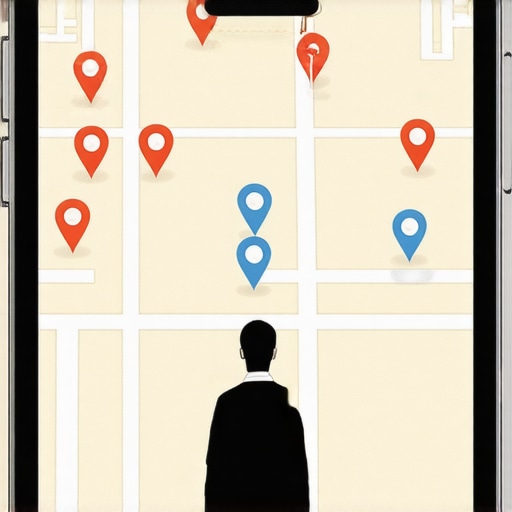
A google maps rank tracker is essential. Instead of a single ranking number, these tools provide a “Grid Rank” view. This shows you exactly where your ranking drops off. You might rank #1 directly in front of your building, but drop to #10 just two blocks away. This data tells us exactly where we need to strengthen our geo-relevance signals. If you rely on basic tools, you are likely suffering because your google maps rank tracker is showing you a distorted reality.
By using a comprehensive gmb ranking service approach, we look at these grid patterns to identify “blind spots” in your local coverage. We then use that data to tailor your content, citations, and backlink strategy to fill those gaps.
Section 7: Conclusion & Action Plan
Ranking in the Google Map Pack in 2026 requires more than just a high star rating. It requires a sophisticated balance of proximity management, technical relevance, and consistent prominence building. If your map pin is stuck on the second page, it is a signal that your “entity authority” is lacking in the eyes of the algorithm.
To break through the barrier, you must move beyond the basics. Start by performing a deep google business profile audit to identify category conflicts, missing schema, and stale content. Remember, in the world of local SEO, reviews are just the invitation to the party – technical optimization is what gets you through the door.
If you are ready to stop being invisible and start dominating your local market, it’s time for a professional intervention. Whether you need a comprehensive google maps seo overhaul or a “Done-for-you” local campaign, the path to the Top 3 starts with data-driven strategy. Don’t let your 5-star reputation go to waste on the second page.